Summer Reading List!

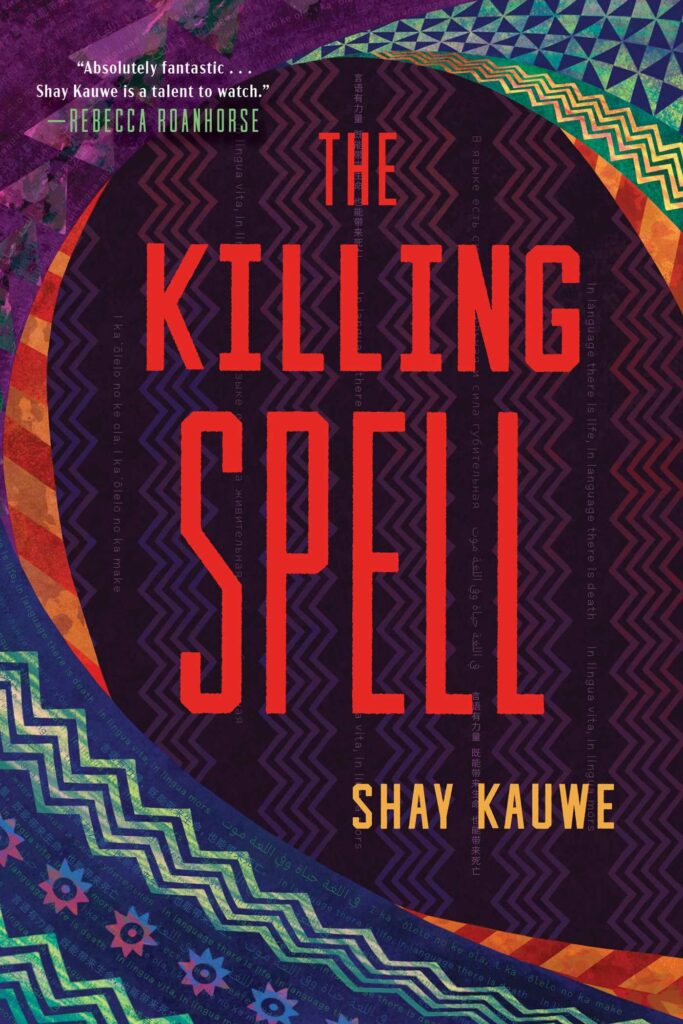
I usually only share my summer reading list with my students, but to keep myself even more accountable, I thought I’d post my list here. Often, I end up reading completely different things, sometimes out of necessity. Still, I’m hoping to stick to the list this summer! I’m currently reading Trevor Noah’s memoir, Born a Crime. I also plan to complete my re-read John Green’s The Anthropocene Reviewed. I just read and enjoyed The Killing Spell by the very talented Shay Kauwe and an eye-opener of a book, How to Do Nothing: Resisting the Attention Economy by Jenny Odell. Highly recommend both of those! They’re setting me up well for summer reads.

But first!

Black and white photograph of a well-dressed black woman Pauline Hopkins wearing a big fancy hat - one of the research projects for the summer

I’m currently in the midst of a research project. So before I can get to the more for-funsies stack, I am in the middle of reading a heap of academic work on the great Pauline Hopkins, including issues of the magazine she edited in the early 1900s. I first came up with this idea in a survey course I was teaching on African American Literature. I found myself wondering about Hopkins and her perspective on US imperialism, a pervasive subject in the late 1800s and early 1900s.

There is of course Hopkins’s amazing modernist short mystery, “Talma Gordon,” but it gives so little insight into what she may have been thinking besides the story’s opening conversation. I found a lot more by contemplating her editorship. “Talma Gordon” in particular seems sparked by a reader’s letter to the editor about interracial marriage that Hopkins keenly disagreed with in no uncertain terms. If all goes well, I hope to present some of this research at the American Literature Association conference in May. (Incidentally, I plan on reuniting – and meeting for the first time – some of my co-authors (and our fearless editor Andy Oler) from Lingering Inland: A Literary Tour of the Midwest – now out in print!

And finally, the list:

Overly ambitious as always….

  • The Valley of Vengeful Ghosts by Kim Fu (fiction – horror)
  • The Wilderness by Angela Flournoy (fiction)
  • Night Owl by Aimee Nezhukumatathil (poetry)
  • Too Soon by Betty Shamieh (fiction)
  • American Han by Lisa Lee (fiction) 
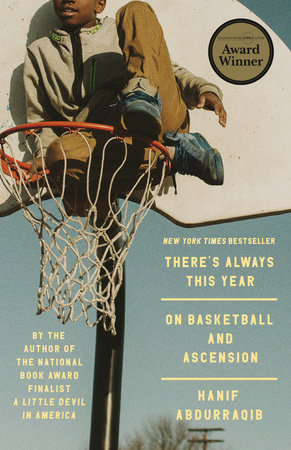
  • There’s Always This Year: On Basketball and Ascension by Hanif Abdurraqib (non-fiction)
  • Angels in America by Tony Kushner (play)
  • The Midnight Taxi by Yosha Gunasekera (fiction – a mystery!) 
  • Eye Level by Jenny Xie (poetry)
Cover of "Too Soon" by Betty Shamieh. Abstract illustration of a female face outlined in green hair  overlaid by bold red text. Creative, artistic vibe.
Cover of "The Valley of Vengeful Ghosts" by Kim Fu. Bright, bold text overlays dark, rainy hills with scattered houses, creating a mysterious tone.
Cover of the book "Night Owl" shows a colorful sunset sky with stars, reflected in calm water. Bold text overlays the image, creating a serene atmosphere.
Cover of "The Wilderness" by Angela Flournoy features abstract patterned sofas, a fireplace, and colorful geometric shapes, conveying a whimsical, eclectic tone. Currently at the top of the summer reading list
Colorful tribal inspired swirl shaped in an ocean wave, with the middle title "The Killing Spell" by author Shay Kauwe. Blurb: “An absolutely fantastic debut. A fantasy steeped in language magic and a murder mystery, The Killing Spell serves as a thoughtful exploration of the consequences of colonization and the choices the colonized are forced to make in order to survive. I tore through this book and loved every second. Shay Kauwe is a talent to watch.”


– Rebecca Roanhorse, New York Times bestselling and Hugo Award-winning author of the Between Earth & Sky trilogy
Cover of Black boy sitting in a basketball hoop. Title: There's Always This Year: On Basketball and Ascension by Hanif Abdurraqib

The College Days of an Indian Girl, Part II

My last post was about my Zitkála-Šá essay (soon to be published in a book entitled Lingering Inland: A Literary Tour of the Midwest). I realized while writing that post that not everyone (including me, it turns out) has access to the-website-formerly-known-as-Twitter anymore, so I’m recreating my post about Zitkála-Šá below:

I wrote about Zitkála-Šá’s time as a student at Earlham College for New Territory Magazine! Here are five tidbits about her speech, “Side by Side,” that didn’t make it into my teeny tiny article:

The “Indian question”

First, Zitkála-Šá delivered an earlier version of this speech (also award-winning!) at Earlham. She rewrote it for the state competition to allow her wider audience (including judges from Harvard, Yale, and Vanderbilt) to hear more of her thoughts on equality and “the Indian question.”

This speech was given on May 13, 1896 as part of the 22nd Indiana State Oratorical Contest in Indianapolis.

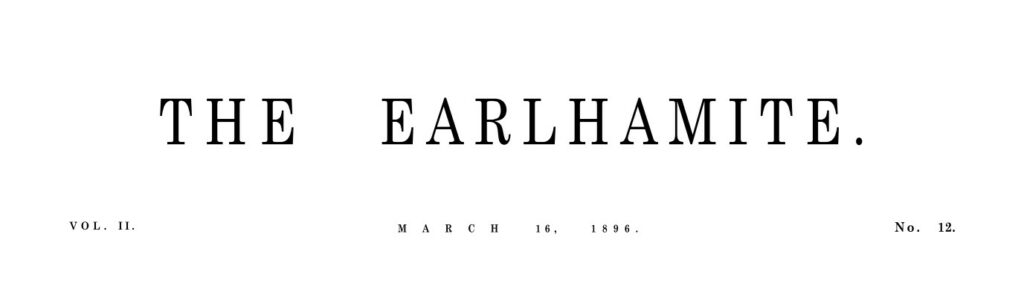
The Earlhamite, the school paper that covered her speech

Meet Gertrude

Zitkála-Šá (aka Gertrude Simmons) was the only woman and the only American Indian in the state competition. She was also just a freshman. The contest took place at English Hotel and Opera House, in Indianapolis’s Monument Circle. See this article from Historic Indiana for details and pictures.

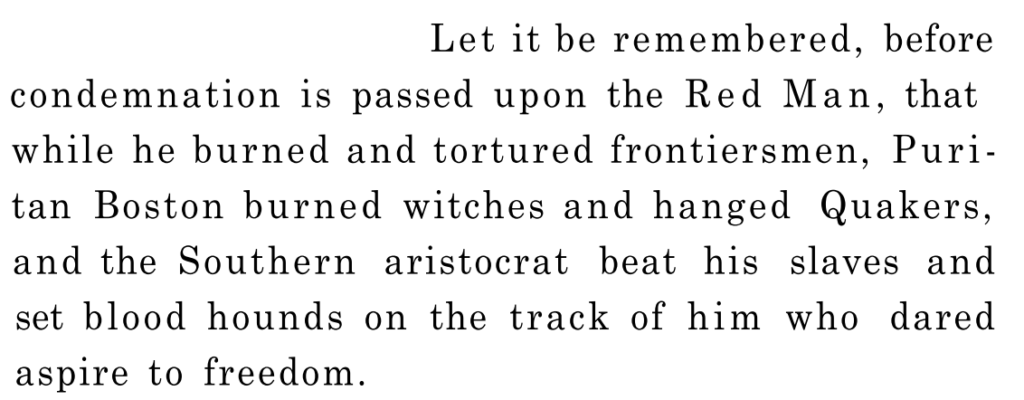
In the article, I mention the Vanderbilt judge. He was a Southern man who disliked the part of Zitkála-Šá’s speech that mentioned slavery and gave her low marks because of it! Here’s what she said:

Praise for her speech

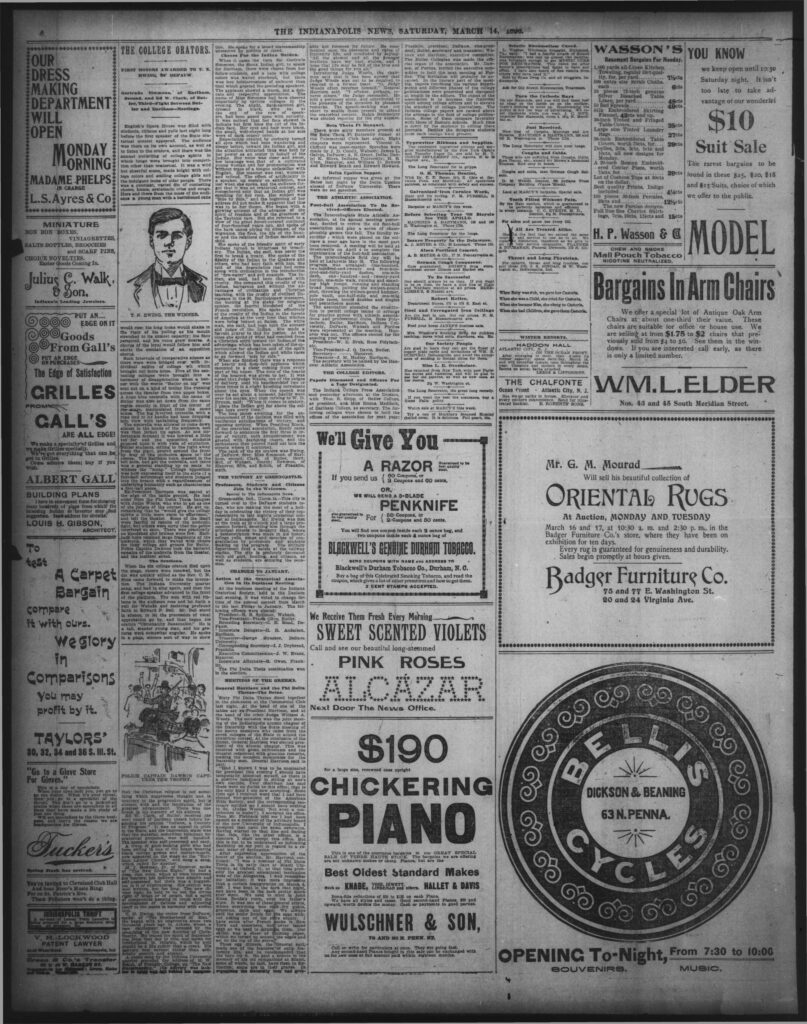
The Indianapolis News said Zitkála-Šá had a tough audience. Still,”her language was that of a cultivated young woman and her pronunciation was without trace of a tongue unfamiliar with English. Her manner was real, womanly and refined.” Feels like the 1896 version of “She’s so articulate!” :\

page of Indianapolis News

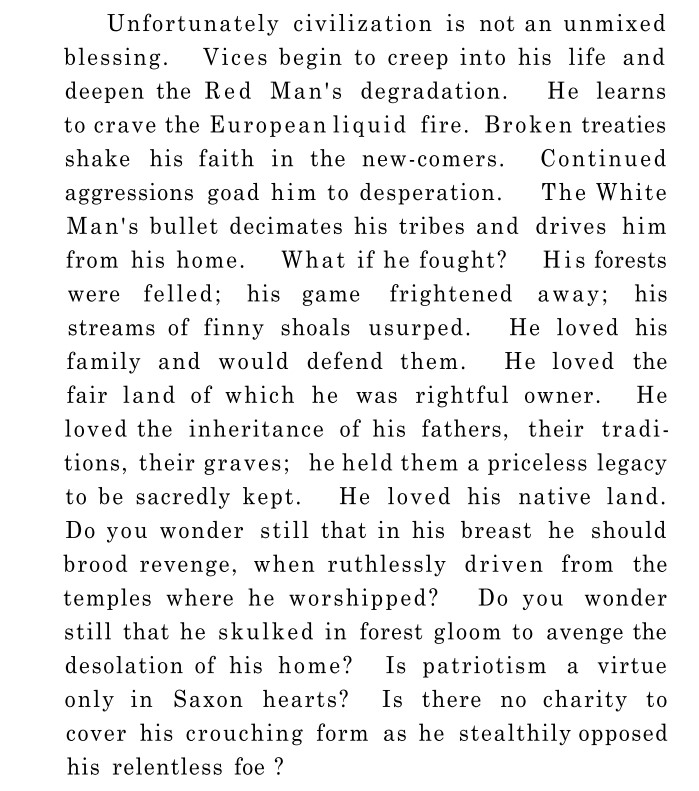
Part of the speech details everything lost to the advent of “civilization” (ie, broken treaties, “the White Man’s bullet” etc). “He loved his native land. Do you wonder still that in his breast he should brood revenge, when ruthlessly driven from the temples where he worshipped?”

Thanks again to Andy Oler for giving me such good feedback and the chance to write about one of my faves in the first place. Thanks, too, to Jenny Freed and Thomas Hamm, knee-deep in the archives at Earlham’s Lilly Library, for their help. Librarians truly are the bestest.

Find my earlier post about my essay here. Pre-order a copy of Lingering Inland at these links:

Lingering Inland

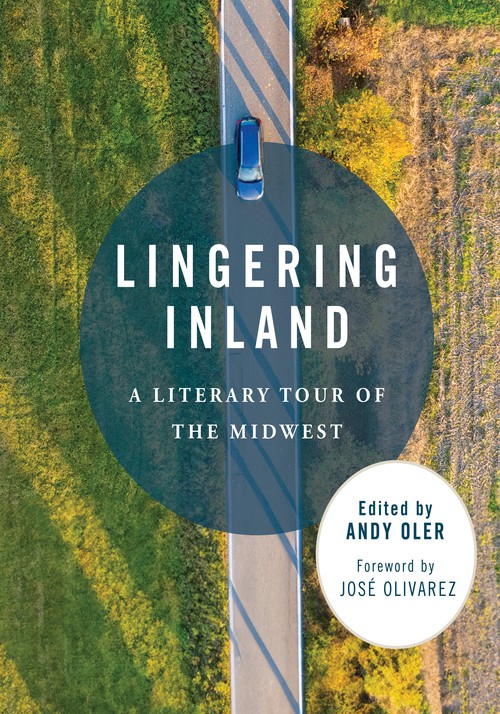
My essay for The New Territory on author and activist, Zitkála-Šá will be featured in a book entitled Lingering Inland: A Literary Tour of the Midwest. It’s coming out this December with University of Illinois Press!

The book is edited by Andy Oler, with a foreword written by one of my favorite poets, José Olivarez. I had the pleasure of meeting José when he did a poetry reading for the Kellogg Writers Series at the University of Indianapolis back in 2024.

The book cover for Lingering Inland

Here’s the description of the book:

How do the stories we tell about Midwestern places influence or reflect our experiences? How is the literature of a place or a region relevant to the people who live there?

In this expansive anthology, Andy Oler collects 73 original short essays by a diverse array of contemporary writers. Each explores locales in Midwestern literature relevant to the life and work of literary figures and canonical authors such as Toni Morrison and Willa Cather. Lingering in these places in both body and mind, the contributors contemplate the resonances and desires nurtured by their chosen location. Together, the essays take readers on an odyssey that maps our inner longing to connect across vast landscapes.

A singular collection of creative nonfiction, Lingering Inland plumbs the personal and collective essence that binds Midwesterners together through words and places.

Some of my fellow co-authors and I will be joining our editor Andy Oler to chat about our book at Proof: A Midwest Lit Fest on October 11. Details are here: https://indianahumanities.org/event/literary-landscapes-of-the-midwest/

Pre-order a copy of Lingering Inland at these links:

Hurston’s Indigenous Inspirations and the Forgotten Hurricane

My article, “Making A Way Out of No Way: Hurston’s Indigenous Inspirations,” was recently published in The Comparatist . It discusses several examples of engagement with Indigeneity in the works of novelist, anthropologist, and author Zora Neale Hurston. There’s also mention of a pretty significant hurricane that hit Florida.

As a follow-up to the article, I presented last week on just the weather-related piece for the annual Zora Neale Hurston conference hosted by Bethune Cookman University. This was quite the exciting research find for me, focused on the hurricane in Hurston’s 1937 classic, Their Eyes were Watching God. Also known as the Okeechobee Hurricane, the Forgotten Hurricane, and the San Felipe Segundo, the storm hit Puerto Rico and then Florida – landing in West Palm Beach.

My research presentation included images like this one, from the National Oceanic and Atmospheric Administration (NOAA).

Amazingly, Hurston was not in Florida for the 1928 hurricane, but the NEA notes that she was in the Bahamas for a particularly devastating hurricane in 1929. She managed to rescue a family from a house just before it collapsed.

I also shared newspaper articles Hurston might have consulted, images from the Library of Congress and more. It was especially fun sharing the ways in which Hurston likely engaged with a Birmingham Reporter article by Mary McLeod Bethune, given that Bethune is the original namesake of the university hosting the conference. It was also fun seeing my fellow NEH Hurston Institute colleagues present, as well as one of our instructors, Dr. Deborah Plant.

Advancing Racial Equity Speakers Bureau

I’m excited to serve on the speakers bureau as one of 15 people from across the state chosen by Indiana Humanities, our state humanities council. The 2023-2024 theme is Advancing Racial Equity.

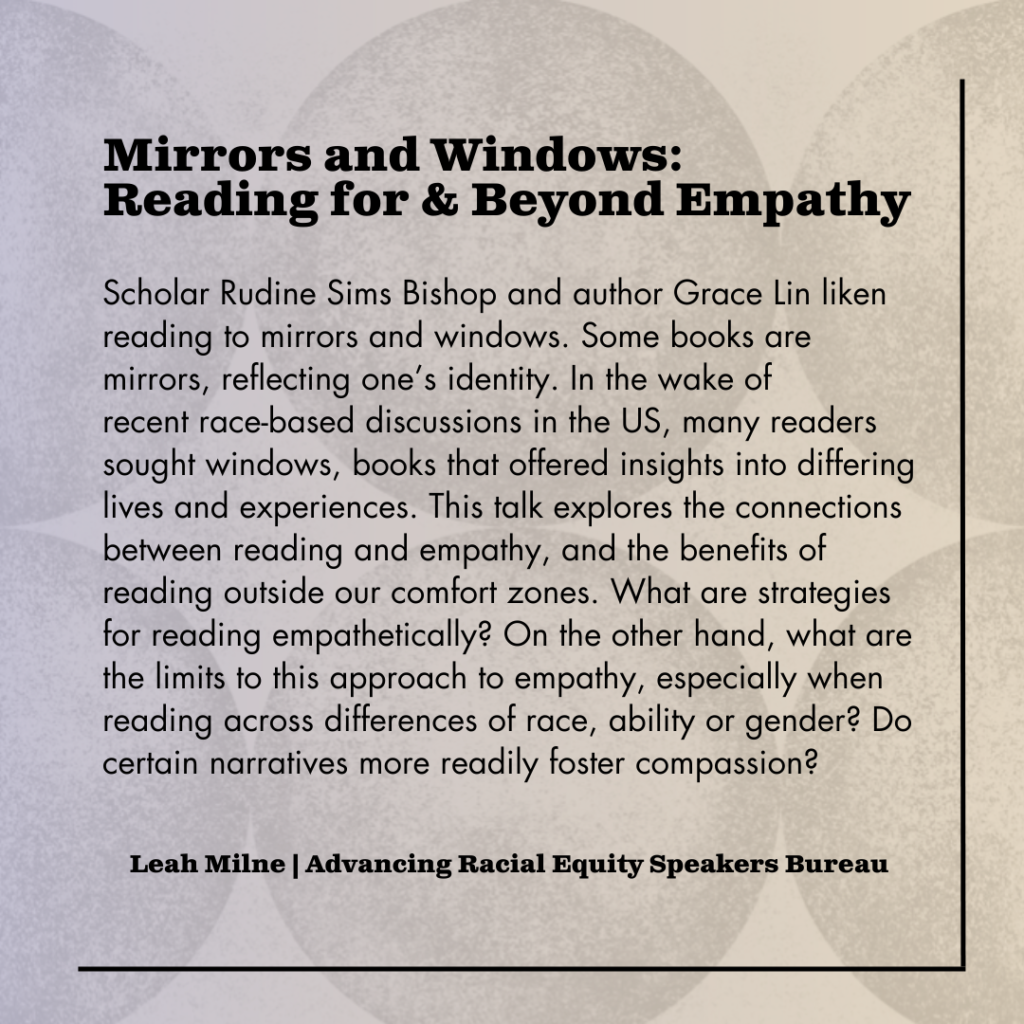
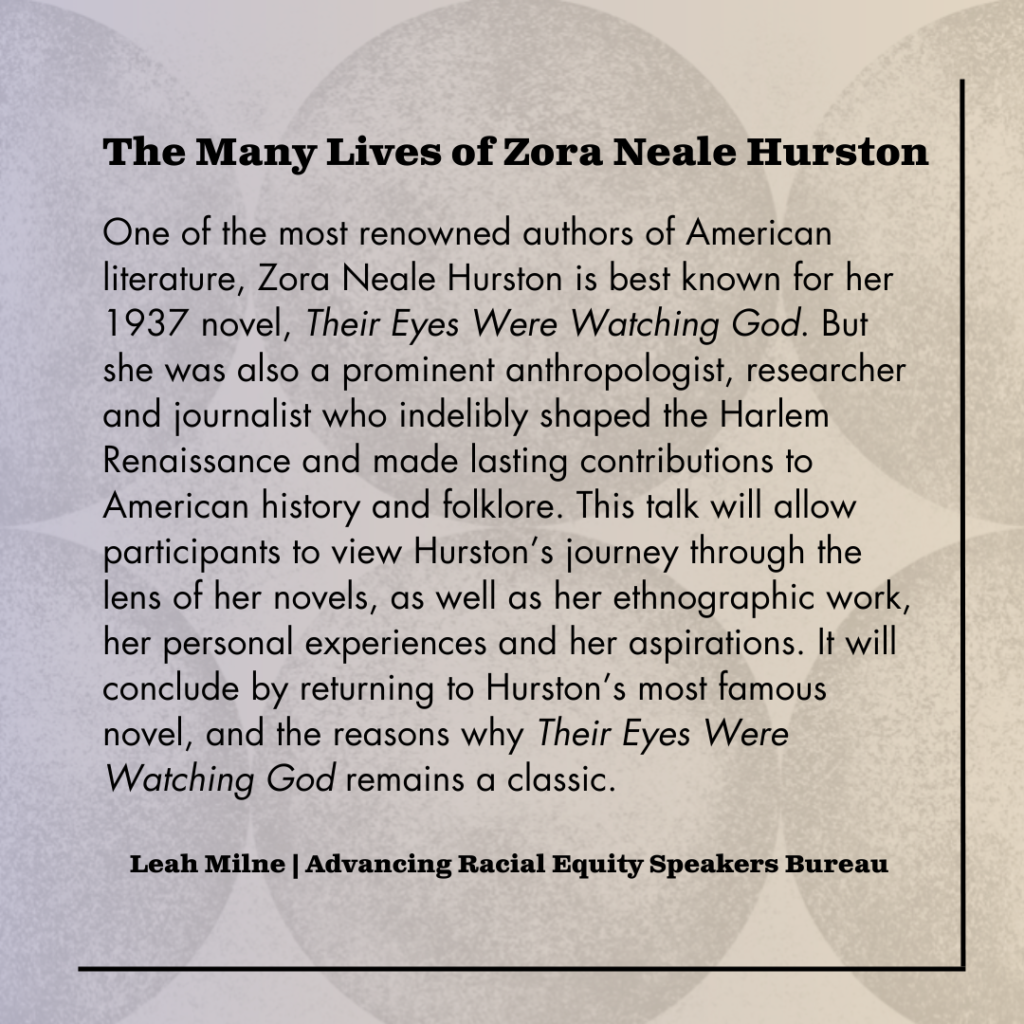
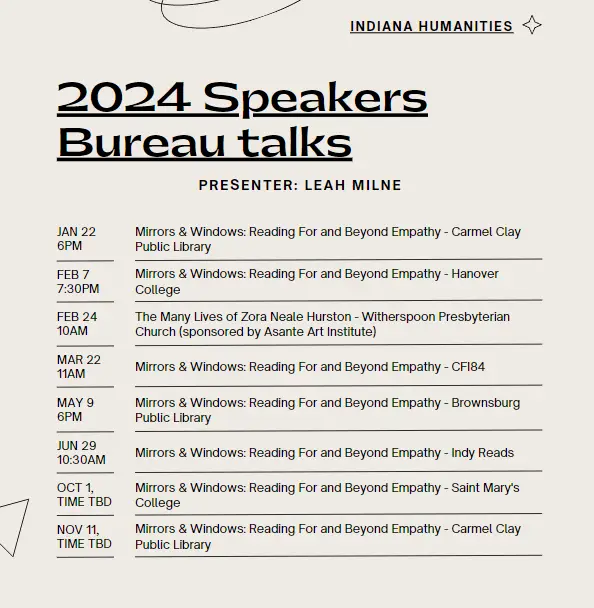
I’ll be giving two major talks as part of the Speakers Bureau. One is entitled “Mirrors and Windows: Reading for & Beyond Empathy” and the other is “The Many Lives of Zora Neale Hurston.” The latter grew out of discussions and readings I did as part of my National Endowment of the Humanities (NEH) work, Hurston on the Horizon. You can find the descriptions of my two talks below:

These and the descriptions of the other talks are available in the catalog linked here: https://indianahumanities.org/wp-content/uploads/2023/07/Racial-Equity-Speakers-Bureau-V4.pdf

I’ll be giving multiple versions of these talks in 2024 across the state, some through the Speakers Bureau, and others in connection to Indiana Humanities’ One State / One Story program, whose book selections this year are Tiya Miles’ All That She Carried: The Journey of Ashley’s Sack, a Black Family Keepsake and Ashley Bryan’s Freedom over Me. Ever since my work with the Op Ed Project, I’ve been thinking more about how to discuss complicated issues such as race and equity with the public. I’m looking forward to these public conversations about the humanities and literature.

As I told my institution recently, “The intercultural and interdisciplinary analyses that the humanities provide are needed now more than ever, especially when it comes to complicated, open-ended issues such as advancing equity. I’m honored to lead humanities-based discussions with the public on the important topics of racial equity, literature, and empathy. My talks are still being booked, but at this point, I know I’ll be hosted by at least eight different organizations across the state, which shows a clear need for us to continue having these vital conversations.”

Naturalistic Elements in Wounded by Percival Everett

As a scholar and fan of metafiction, I am often drawn to the dynamic and prolific work of author Percival Everett. His most famous metafictional novel is his 2001 erasure. The novel is about a writer named Thelonious “Monk” Ellison who finds his philosophical work outshone by what in many ways is its opposite–an in-your-face “urban” novel about a potentially caricatured form of Black life. (erasure is arguably his most famous novel of all, though his new ones get a lot of attention every time one comes out. And of course, his 2020 Telephone was a Finalist for the 2021 Pulitzer Prize for Fiction.)

I wrote about erasure and another metafictional novel, his 2013 Percival Everett by Virgil Russell, for the journal, African American Review.The article, entitled “Intimate Realities and Necessary Fiction in Percival Everett by Virgil Russell,” appeared in 2019. It would later form part of the basis for my book, Novel Subjects: Authorship as Radical Self-Care in Multiethnic American Narratives. In the fourth chapter, I read Everett’s work against that of Filipino American writer, Miguel Syjuco, and his 2008 novel, Ilustrado.

On to the new article!

My latest research on Percival Everett’s work is also my first foray into open-access publishing, which made it doubly exciting. You can find this article published in Humanities, an international peer-reviewed journal. The article is part of a special issue entitled “The Continuing Challenges of Percival Everett.” I believe you can download all of the articles in the issue here.

My contribution focuses on one of Everett’s many westerns, a 2005 novel entitled Wounded. The novel is deceptively simple on the surface, but the more I dug into it, the more I realized its interesting depths. My exploration began when I came across an interview where Everett was still working on the book and summarized it this way:

“The working title is Wounded. It’s a really naturalistic novel. My interest is in the form of a realistic novel. You have to love the form you’re working in, but I’m seeing what I can do.”

Percival Everett, in an interview with Joe Weixlmann (link)

You can find the full text of my article, entitled “Naturalistic Elements in Percival Everett’s Wounded” at this link!

On bell hooks and compassion

Many scholars, teachers, and readers mourned the death of author and activist bell hooks. I first read bell hooks’ work in a graduate course. We were fortunate to be assigned an excerpt from Teaching to Transgress: Education as the Practice of Freedom, which informs much of my teaching to this day.

With all of the recent events including the country’s reckoning with Black killings, the pandemic, and the anti-Asian racism that followed, I found myself thinking a lot about bell hooks and very generous and forthright approach to compassion.

I began reflecting on this in a form of an op-ed for my work with the Public Voices Fellowship (more info here). But then I got an e-mail from Dr. Ayesha Hardison, one of our fearless leaders of our NEH Institute workshop, Hurston on the Horizon. She invited everyone to submit writings for a special issue of Women, Gender, and Families of Color entitled “Honoring bell hooks’s Legacy: Humanist, Feminist, Public Intellectual, Social Critic, and Educator.” It was nice to have the opportunity to think more deeply about hooks’s thoughts on compassion in the company of fellow scholars, readers, and fans. We even had a kickoff on Zoom to celebrate the issue’s completion.

The special issue’s guest editors Cécile Accilien, Manisha Desai, and Luz María Gordillo also serve as members of the journal’s editorial board. In place of a traditional preface, they created a trailer of their conversation about the issue. You can view it here:

Guest editors’ recorded introduction. The full video is available here.

The essay I wrote, titled “Trusting in the Power of Compassion,” ended up being more personal than usual. I also talked a bit about Lauren Berlant, who died around the same time as hooks. You can read it in its entirety here: https://womengenderandfamilies.ku.edu/online-essays-honoring-bell-hookss-legacy/1362/

Novel Subjects book talk!

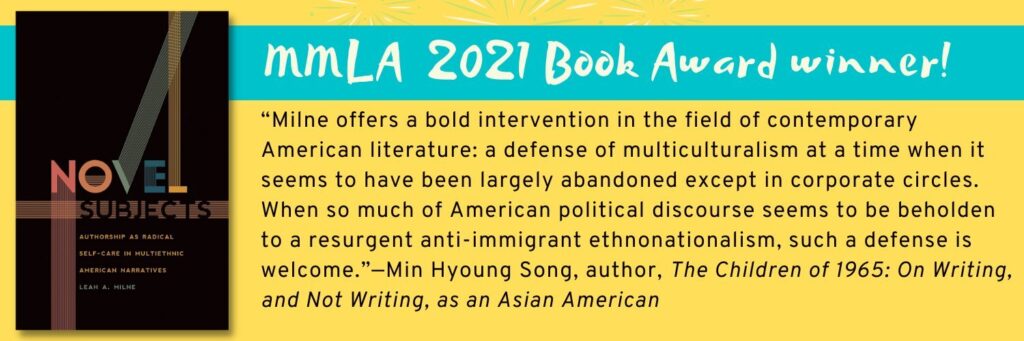
My book, Novel Subjects: Authorship as Radical Self-Care in Multiethnic American Narratives, turned a year old this past June, and a lot has happened since its publication!

Just before it was published, I was able to give a talk on it for one of my favorite organizations, The Circle of Asian American Literary Studies (or CAALS); I do a brief recap of that talk at this link.

A bit later on January 2022, I got some still-amazing-to-me news: Novel Subjects won the Midwest Modern Language Association Book Award.

Novel Subjects: Authorship as Radical Self-Care in Multiethnic American Narratives - MMLA 2021 Book Award winner - blurb: “Milne offers a bold intervention in the field of contemporary American literature: a defense of multiculturalism at a time when it seems to have been largely abandoned except in corporate circles. When so much of American political discourse seems to be beholden to a resurgent anti-immigrant ethnonationalism, such a defense is welcome.”—Min Hyoung Song, author, The Children of 1965: On Writing, and Not Writing, as an Asian American

Most recently, I gave a #USSOBookHour talk about Novel Subjects to US Studies Online, an organization that bills itself as “the Postgraduate and Early Career Researcher webspace of the British Association for American Studies (BAAS).”

My first experience with this organization was way back in 2015, when I was still a graduate student UNCG. My advisor and mentor, the great Dr. María Carla Sánchez, was (and remains) very actively involved in the Society for the Study of American Women Writers (SSAWW). She encouraged me to write a short article for this thing they were doing–a series of articles they were doing in collaboration with US Studies Online. From that resulted one of my first online articles, “(In)Visibility, Race, and Ethnicity in American Women’s Writing throughout the Twentieth Century.” (I remain proud of the fact that it sports a picture of Mindy Kaling and a book by Gina Apostol.)

A few months later, US Studies Online invited me to lead a USSO Book Hour. Back then, these events were public, moderated book-group-style discussions. I definitely dealt with imposter syndrome while leading an online discussion about Toni Morrison’s novel God Help the Child along with Justine Baillie, Michelle Green, and Susan N. Mayberry, but it was a lot of fun.

I ended up talking about Morrison’s novel again in my talk last week. In the current format of USSOBookHour, a scholar gives a talk about their book, and then takes questions from attendees. Organizer Aija Oksman from The University of Edinburgh informed me that a number of the early career and graduate student attendees wanted to know about how Novel Subjects went from dissertation-to-book, so I included that in my talk as well. You can find more about the event at the below link, and a recording below

https://usso.uk/2022/11/25/book-hour-returns-with-leah-a-milne-and-novel-subjects-authorship-as-radical-self-care-in-multiethnic-american-narratives/

Hurston on the Horizon – NEH institute

The NEH Hurston scholars 2021

UPDATE: I published an op-ed with Visible Magazine about Hurston’s somewhat controversial take on Brown v. Board of Education. You can find the article here: https://visiblemagazine.com/zora-neale-hurston-was-prescient-on-race/

Last summer, I was one of 25 scholars chosen to participate in a summer institute on the great author and anthropologist, Zora Neale Hurston. The National Endowment for the Humanities summer institute entitled Hurston on the Horizon: Past, Present, and Future was directed by Ayesha Hardison and Maryemma Graham and is affiliated with the University of Kansas Project on the History of Black Writing. KU, by the way, is where Hurston biographer Robert Emery Hemenway’s archives are housed as he was a chancellor there, and we got to access those archives along with other exciting material. We were also fortunate to have at our Zoom-ing fingertips access to some of the greatest Hurston scholars as institute faculty and guest speakers, including the aforementioned directors, Kevin Quashie, Deborah McDowell, Glenda Carpio, Carla Kaplan, Giselle Anatol, and more.

My interest in participating in the Institute comes from being a big fan of Hurston’s novels, but also having the chance to devote time to reading everything else she has written. I remain especially interested in the way she writes about navigating institutional spaces as a woman of color, and what’s behind that characteristic grit that we often read about in her essays such as “How It Feels to be Colored Me.” I was able to share some of her writings as well as video and audio from our institute and some great Library of Congress materials from Hurston’s ethnographic work with my students this past semester for my Women Writers course, and hope to be able to do so again this upcoming semester in my American Literature course. (You can find more about my teaching here.)

Hurston webinars

Last month, as part of the institute, I also moderated the third of three follow-up webinars. The first was with the great Hurston biographer Valerie Boyd, and the second was with novelist Tayari Jones. You can find my live-tweet coverage of the Boyd discussion here. I moderated the third talk, with philosopher Lindsay Stewart. Our talk on her book, The Politics of Black Joy: Zora Neale Hurston and Neo-Abolitionism, is below. Information on all three webinars can be found here: https://hurston.ku.edu/news/webinars

There’s more to come with Hurston! Among other things, I will be participating in a mini-conference with other fellow NEH institute scholars later this month. My presentation, “Hurston on the Limits of Knowledge and Representation,” will discuss some of her essays, including a few recently published for the first time this month. We hope to be able to do an in-person reunion and meetup sometime next year at ZoraFest.

You can find out more about the institute here: https://hurston.ku.edu/

My book, Novel Subjects, is here!

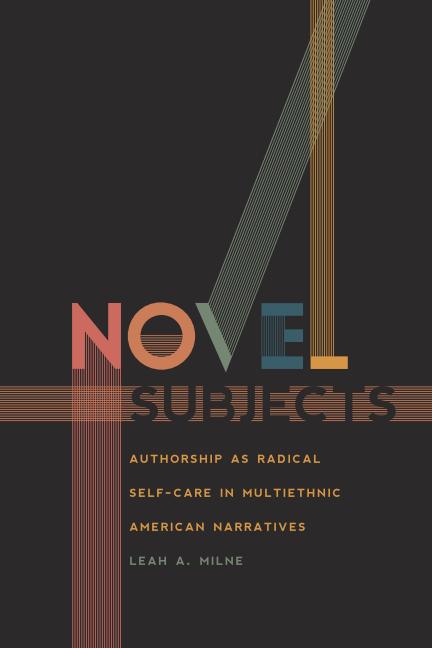
It’s been a busy few weeks so I haven’t had the chance to post about the fact that my book, Novel Subjects Authorship as Radical Self-Care in Multiethnic American Narratives, is officially a real thing out in the world!

Milne - Novel Subjects
The book cover of Novel Subjects! (Keep reading for a discount code.)

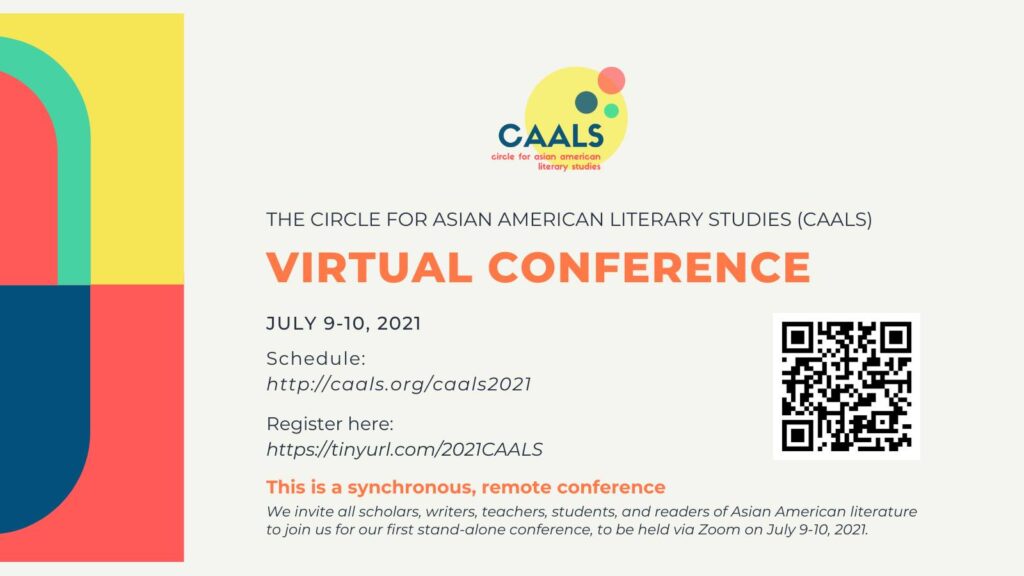
In my defense, part of why I’ve been so busy has been because I was preparing a presentation on the book, which I gave as part of the 2021 Circle for Asian American Literary Studies (CAALS) Virtual Conference.

2021 Circle for Asian American Literary Studies (CAALS) Virtual Conference
You can find the full conference schedule at http://caals.org/caals2021

My presentation was part of a larger book conversation panel with Dr. Swati Rana, whose book is entitled Race Characters Ethnic Literature and the Figure of the American Dream (2020, UNC Press). Even though she covers the 20th century from 1960 and before while my book talks about a bunch of books published more than a couple of decades later, it turned out that there were numerous overlaps in our concerns and questions. Our conversation was moderated by the great Dr. Betsy Huang.

For my part, I outlined two of the basic questions underpinning Novel Subjects, namely:

  • How does contemporary literature contend with the power and responsibility of authorship, particularly in narratives of marginalized groups?
  • How has multiethnic literature challenged the notion that writing and authorship are neutral or universal?

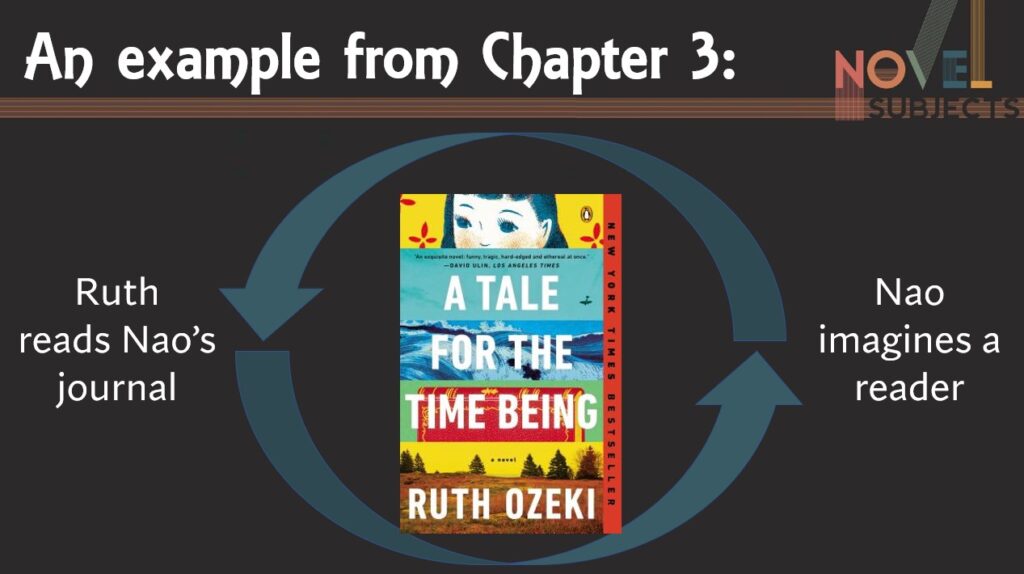
I provided an example from Ruth Ozeki’s 2013 novel, A Tale for the Time Being. Ozeki’s novel depicts two author-protagonists—one named and modeled after Ozeki herself, who happens upon a journal written by a second author, the fictive teenaged writer named Nao. Especially because they are separated by time and space, we might assume that this reader-writer relationship goes in only one direction.

A diagram of writers/readers/protagonists in A Tale for the Time Being.

However, in Ozeki’s novel, it’s circular—both writers have the power to influence the other in very personal and intimate ways that also shape their self-assessments and perspectives. In fact, at one point, (spoiler alert!) the character Ruth actually crosses into the fictional storyworld of Nao and Nao’s grandmother, deliberately altering the trajectory of the plot itself.

In this way, my book focuses on author-characters who Sara Ahmed might call willful and intrusive—they both intrude upon and interrupt the metafictional tales that they tell, while at the same time willfully insisting upon telling these tales in the first place, often through a reliance on unconventional, unaccepted, or even  seemingly inauthentic methods and approaches.

If you want to know what texts I discuss in Novel Subjects, you can find a Bookshop list here.

My publisher has kindly offered a 40% discount code on Novel Subjects for those who are interested. You can order from their website using the code NOVEL40.

css.php